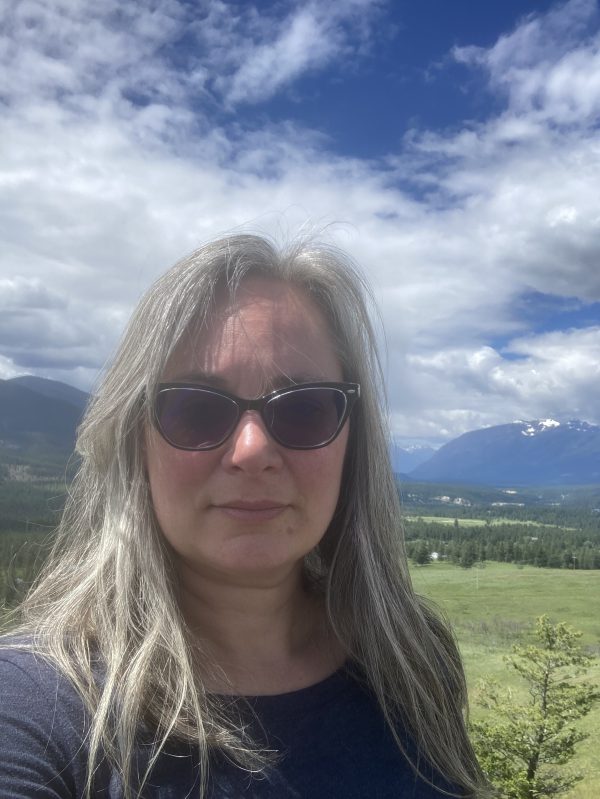
At 45, Dianne Lund, a Cranbrook-based graduate, knows that meaningful change doesn’t follow a straight line, it often begins with a quiet realization that something no longer fits.
Originally from Kimberley, she spent nearly two decades building a life in Sparwood with her husband and daughter. Professionally, she had stability: for almost twelve years, she worked as an administrative assistant for a supportive employer. “The job was reliable and the company was wonderful,” she reflects. “But the longer I worked behind a desk, the more I realized that it was not the right fit for me.”
The Right Time for a Change
A move back to Cranbrook to be closer to family created more than just a change in address, it opened the door to reflection. Surrounded by the support of loved ones and inspired by friends who had successfully changed careers, she began to think differently about her own path.
“I started asking myself what fulfilling work really meant,” she says. The answer was simple, but powerful: work that makes a positive difference in the lives of others.
With that clarity, she made a bold decision. While her family was already navigating a significant life transition, she chose to take a risk alongside them, stepping away from the workforce to return to school and pursue the Education Assistant (EA) program.
“It felt like the right time,” she explains. “Our family was already making a big change, and I had the support of my husband, my daughter, and our extended family. That encouragement made all the difference.”
A Sense of Purpose Helped with the Challenges
Returning to school full-time after years away wasn’t easy. Balancing coursework, family life, and the demands of practicum placements required discipline and resilience. “It was exciting, but also overwhelming at times,” she admits. “I had to find a new rhythm, supporting my family through their transitions while learning how to be a student again.”
Along the way, she discovered more about how she learns best. Structure became essential, especially for online coursework, and she quickly realized that her most productive hours were in the mornings and late evenings. Compared to her earlier years in school, her approach was more intentional. “As an adult, I take education more seriously. I was there with purpose.”
That sense of purpose came into sharp focus during her first practicum.
“I had the chance to work with some truly amazing mentors,” she says. “It felt like I had found a place where we were all working toward the same goal, and everyone supported each other. Experiencing the way that such a wonderful team can pull together to make a big difference in a student’s life made me feel that I had found not just my future career, but my people.”
It was during these hands-on experiences that everything clicked. She saw firsthand the role Education Assistants play, not just in supporting academics, but in fostering connection, belonging, and inclusion.
“This work isn’t easy, and it’s not glamorous,” she explains. “But it’s incredibly important. EAs facilitate true inclusion, and they have such a meaningful impact on students’ lives.”
Solidifying Her Future
The moments that confirmed she was on the right path weren’t dramatic, they were deeply human. Watching a student master a new skill. Seeing pride light up a face after an achievement. Witnessing positive connections form between peers.
“Those moments make my day,” she says. “They remind me why I’m here.”
Through the program, she didn’t just gain new skills, she gained a new sense of self. “Returning to school helped me see that I’m capable of creating positive change,” she reflects. “There were times I doubted myself, when I wasn’t sure I could handle it. But I pushed through—and I’m so glad I did.”
Today, her definition of success has shifted. It’s no longer about stability alone, but about purpose and impact. As she looks ahead, she’s focused on continuing her journey as an Education Assistant and contributing to a supportive school community.
“I hope to help foster independence in students,” she says, “and to work alongside the talented educators in our district to make a difference.”
Her advice for others considering a similar leap is straightforward: take the risk.
“If you’re not happy in your career, it’s never too late to make a change,” she says. “Start small if you need to. Give yourself time to understand how you learn and make space for self-care along the way.”
Looking back, one guiding principle stands out, a phrase that carried her through the program and continues to shape her approach today: connect before you direct.
“It applies to everything,” she says. “And it’s made all the difference.”